STLE Toronto Hybrid Technical Meeting Notice: Closing the Loop in Thermal Fluid Formulation with AI and Automation By. Mohamad Moosavi PhD
Reducing Tribological Losses and Failures – Part 42
STLE TORONTO SECTION – Hybrid
First Speaker : Mr. Mohamad Moosavi, PhD
Subject: Closing the Loop in Thermal Fluid Formulation with AI and Automation
2nd & 3rd Speakers: Brandon & Caden Situ
Subject: Design and Analysis of a Linkage-Based Wheel-Integrated Drive System
Date: Oct 13 2026
Time:
5:30 to 6:00 PM EST – Networking/Refreshments
6 to 6:30 PM EST – Dinner
6:30 – 8:00 PM EST – Presentation, Q&A, Discussion
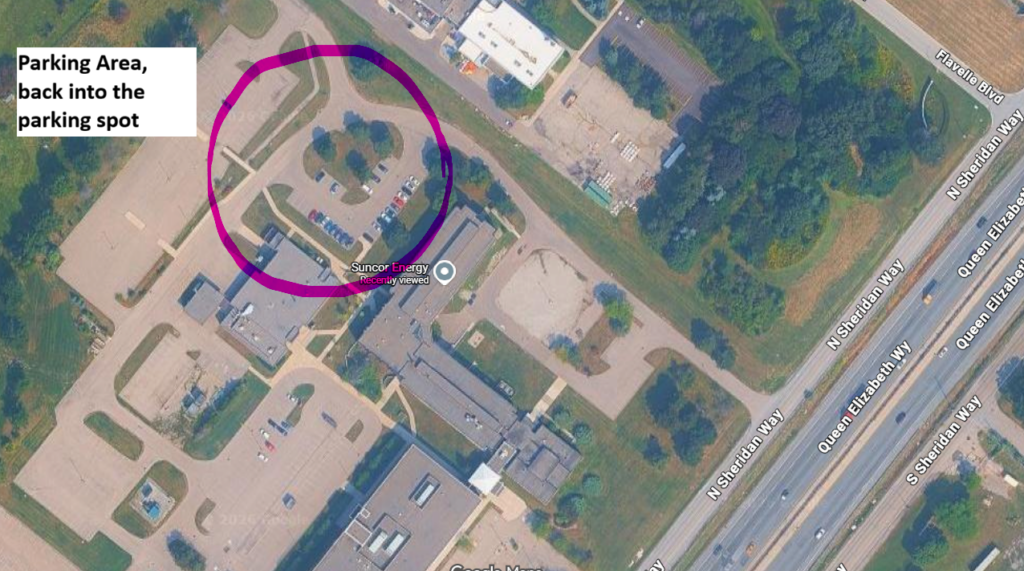
Address: 2489 N Sheridan Way, Mississauga, ON L5K 1A8
Please back to the parking spot.
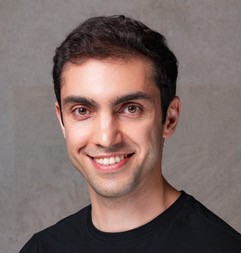
Mr. Mohamad Moosavi PhD
Abstract:
Thermal fluids are critical to technologies such as electric vehicles, data centers, and power electronics, where rising power densities demand fluids with increasingly challenging performance requirements. Designing these fluids is a complex multi-objective optimization problem across vast molecular and formulation spaces, making traditional experimental and computational approaches inefficient.
This talk presents a closed-loop thermal fluid discovery framework that integrates AI, automation, and molecular simulation. A self-driving laboratory (SDL) combines high-throughput experimentation with machine learning to autonomously explore formulation spaces. Using Feature-Adaptive Mixture Bayesian Optimization (FAMBO), the platform efficiently identifies high-performance formulations while substantially reducing experimental effort. Molecular dynamics simulations and representation learning further reveal the molecular origins of nonlinear mixture behavior, enabling predictive and scientifically interpretable AI models.
Together, these advances demonstrate how automated experimentation, intelligent optimization, and molecular-scale insight can accelerate the development of next-generation cooling fluids for electrification, advanced computing, and other energy-intensive applications.

Bio:
Mr. Mohamad Moosavi PhD is an Assistant Professor in the Department of Chemical Engineering & Applied Chemistry at the University of Toronto, where he directs the Artificial Intelligence for Chemical Sciences (AI4ChemS) Lab. He is also a Faculty Member at the Vector Institute for Artificial Intelligence and the Acceleration Consortium. His research focuses on developing artificial intelligence, molecular simulation, and autonomous discovery systems to accelerate the design of advanced materials and chemical formulations for energy and sustainability applications. His work spans foundation models for materials science, molecular representation learning, self-driving laboratories, and AI-guided materials discovery, with recent applications in next-generation thermal fluids, porous materials, and carbon capture. His contributions have been recognized with several awards, including the EPFL Best Ph.D. Thesis Award and the International Adsorption Society Triennial Award of Excellence in Publication.
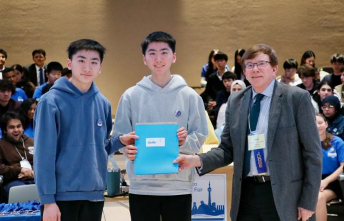
Brandon & Caden Situ
Abstract
Our project is a novel wheel-drive system that integrates the CV joint, drive shaft, and reducer of an automobile directly into the wheel, freeing up space. Through a Watt’s linkage, the wheel can move up and down while still allowing the car to transmit torque and maintain efficient suspension. Our project investigates how changes in linkage geometry affect transmission efficiency and velocity oscillations in a 3D-printed, scaled mechanical model of the drive system. Results showed that certain linkage designs produced the highest transmission efficiency and lowest velocity oscillations while maintaining smooth wheel motion.